To care for a mild dog paw problem at home, clean the paw with lukewarm water, dry it thoroughly between the toes, trim the hair around the pads, apply a gentle pet-safe topical, and stop your dog from licking it. If you see swelling, pus, limping or no improvement within a few days, see your veterinarian.
Is my dog's paw infected? Signs to look for
Most dogs' paws are healthy most of the time. When something is wrong, your dog usually tells you by paying a lot of attention to one foot. Watch for:
- Licking, chewing or biting at the paws or nails
- Redness or pink skin between the toes or around the pads
- Swelling of the toes or the whole foot
- A strong, sour or yeasty smell
- Discharge, crusting or pus
- Hair loss around the paw
- Reddish brown staining on light-colored fur from constant licking
- Broken, split or cracked nails
- Limping or not wanting to put weight on the foot
Dogs with sore paws often seem anxious and restless, because itching and soreness are hard for them to ignore.
What about the "corn chip" smell?
Many dogs' paws naturally smell a little like corn chips. That comes from the normal bacteria and yeast that live on healthy skin, and on its own it is nothing to worry about. A smell that gets much stronger, turns sour, or comes with redness or licking can be a sign of overgrowth, and that is worth a closer look.
What causes paw infections in dogs?
Veterinarians call inflammation of the paw skin pododermatitis. It is a description rather than a diagnosis, because many different things can cause it.
Common causes include:
- Allergies. Environmental allergies such as pollen, grass and dust mites, along with food allergies, are among the most common reasons dogs lick and chew their feet.
- Moisture. The space between the toes traps moisture, which lets bacteria and yeast grow. Dogs that swim, walk in wet grass or have furry feet are more prone to this.
- Foreign objects. Grass seeds, splinters, burrs and thorns can work their way between the toes.
- Injuries. Cuts, scrapes, burns from hot pavement, and torn or broken nails.
- Winter salt and de-icers, which dry out and crack paw pads.
- Parasites. Mites such as those that cause mange can affect the feet.
Bacteria and yeast often move in on top of these problems. That is why a paw that started out as a little itchy can turn into a real infection if the cause is not dealt with.
Can you treat a dog paw infection at home?
Mild problems often can be handled at home: a little redness, a minor scrape, dry or cracked pads, or light irritation from licking. A true infection, with swelling, pus, pain or spreading redness, usually needs a veterinarian.
Home care is the right place to start for minor issues. It is also an important part of recovery alongside anything your vet prescribes.
How to care for a mild paw problem at home
- Look closely. Spread the toes gently and check between the pads and around each nail for grass seeds, thorns or cuts. If something is embedded or you cannot remove it easily, let your vet do it.
- Wash the paw. Rinse with lukewarm water and a mild, pet-safe cleanser to remove dirt and debris.
- Dry it thoroughly. Pat the paw dry, paying extra attention to the spaces between the toes. Moisture left behind is one of the main reasons problems come back.
- Trim the hair. Carefully trim long hair between the toes and around the pads so the area can breathe and stay dry.
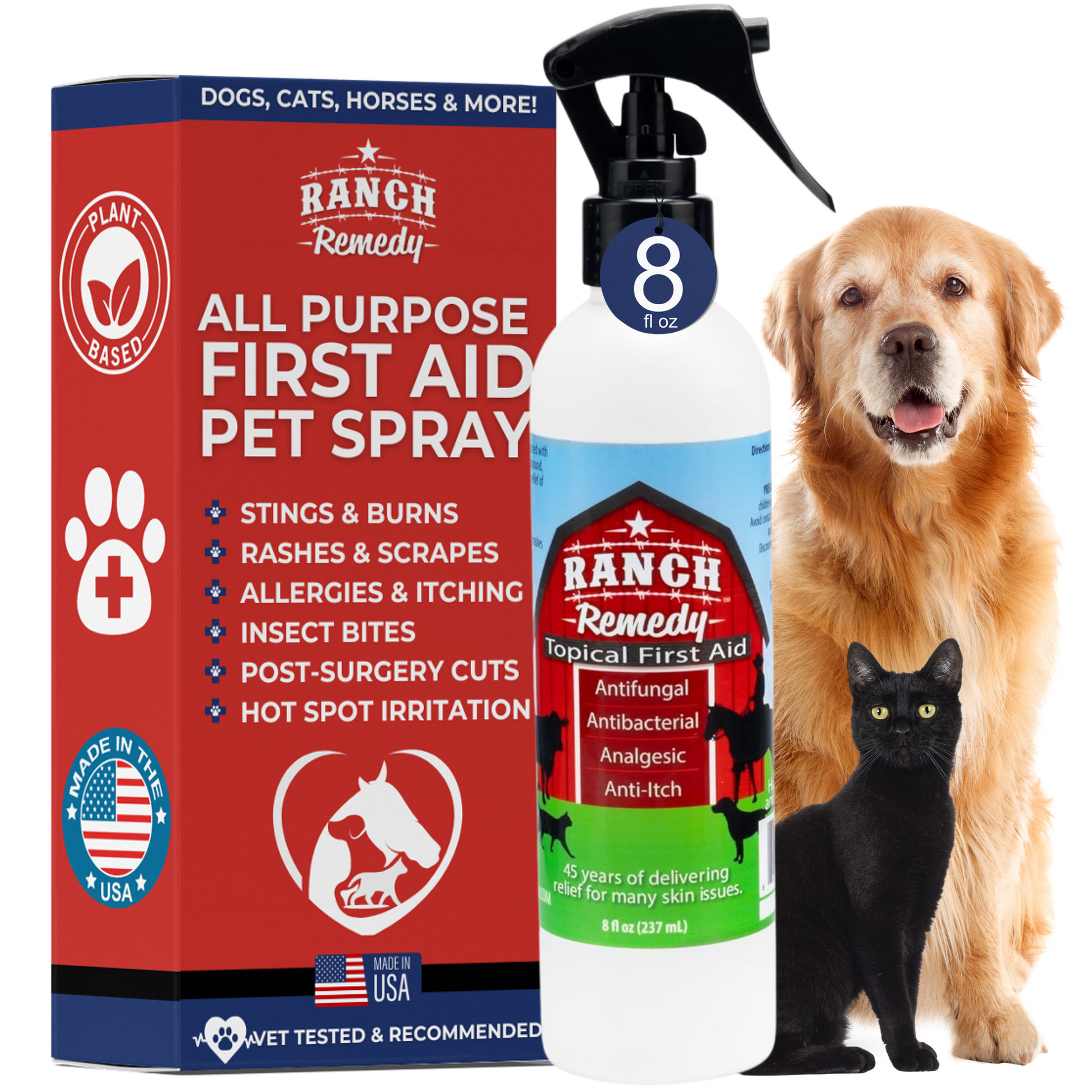
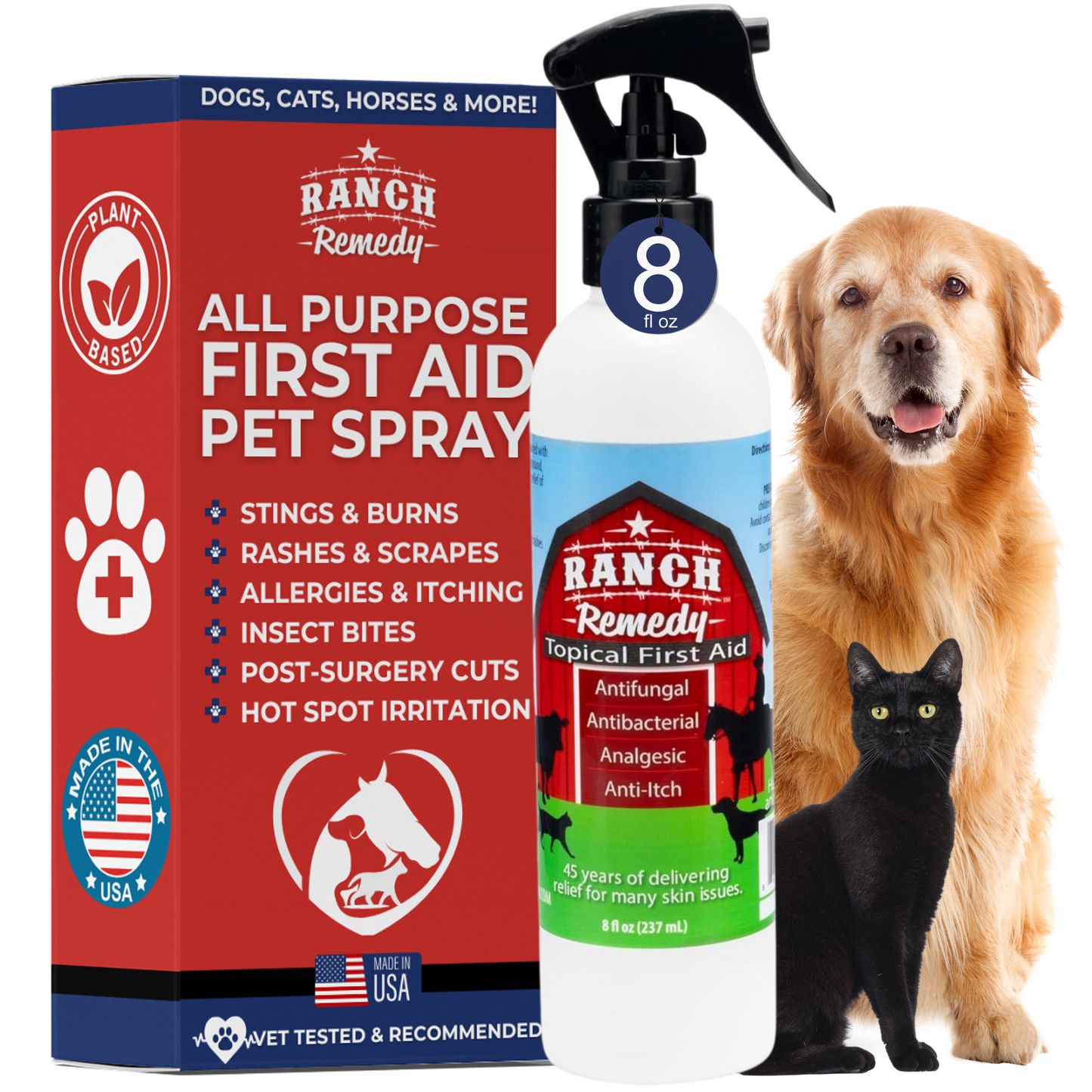
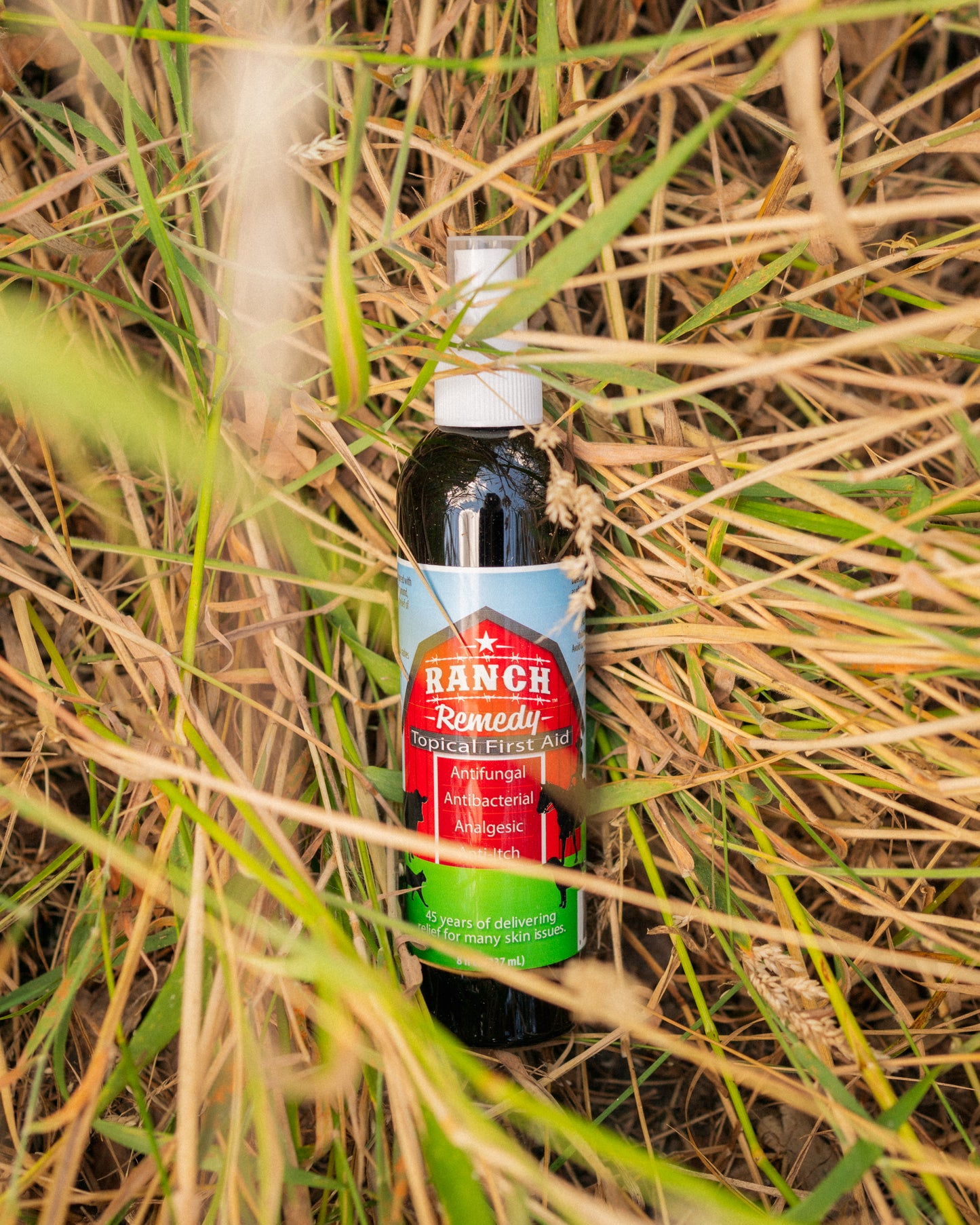
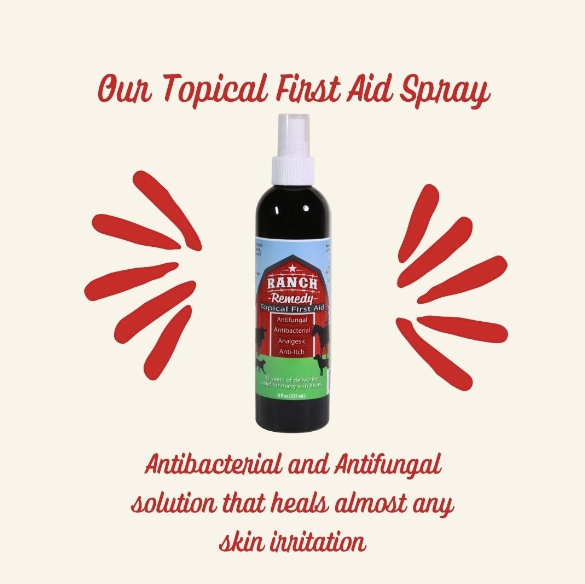
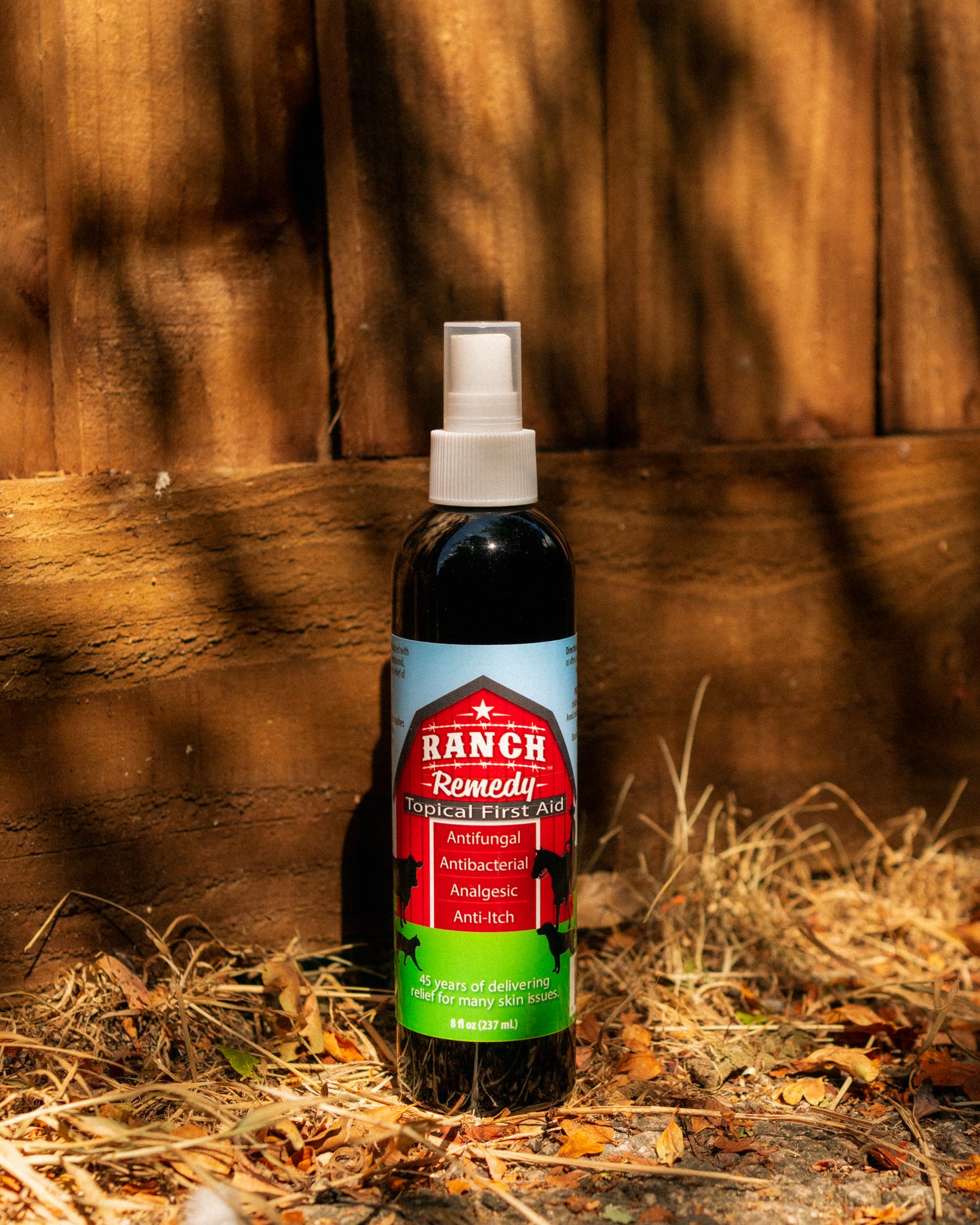
- Apply a gentle topical. Spray or dab on a pet-safe first aid product such as Ranch Remedy Topical First Aid. Use it twice a day, morning and evening, for 7 to 10 days, and gently massage it into dry or cracked pads.
- Stop the licking. Licking keeps the skin wet and irritated. A cone, a dog bootie, or distraction with a chew toy right after applying can help.
- Keep it clean and dry. Wipe and dry your dog's feet every time they come inside, especially after wet grass, mud or snow.
- Watch for a few days. A mild problem should start looking better within a few days. If it is getting worse or not improving, call your vet.
What not to put on your dog's paws
- Hydrogen peroxide, used over and over. It can damage healthy tissue and slow healing.
- Rubbing alcohol. It stings and dries out the skin.
- Human creams and ointments, especially those containing zinc oxide, which is harmful if licked off, or other medications not made for dogs.
- Tea tree oil and undiluted essential oils. These can be toxic to dogs and cats.
- Tight bandages that trap moisture or cut off circulation.
When to see a vet
Please take your dog to the veterinarian if you notice any of the following:
- Swelling, heat or pus
- Limping or refusing to put weight on the foot
- Redness that is spreading
- More than one paw affected
- A foreign object you cannot remove
- A deep cut, puncture wound or bite
- A nail torn down to the quick, or bleeding that will not stop
- Lethargy, fever or loss of appetite
- Paw problems that keep coming back
- No improvement after a few days of home care
Your vet may look at a sample from the skin under a microscope to see whether bacteria or yeast are involved, then treat both the infection and whatever caused it. Allergies in particular often need ongoing management to stop paw problems from returning.
How to prevent paw problems
- Dry your dog's feet thoroughly after walks, swimming and baths.
- Keep the hair between the toes trimmed short.
- Keep nails trimmed so they do not crack or split.
- Check the paws regularly, especially after hikes and time in tall grass.
- Avoid hot pavement in summer and rinse off salt and de-icers in winter.
- Work with your vet to manage allergies if your dog licks their feet often.
- Keep a first aid kit ready so you can clean and care for minor problems right away.
Where Ranch Remedy fits
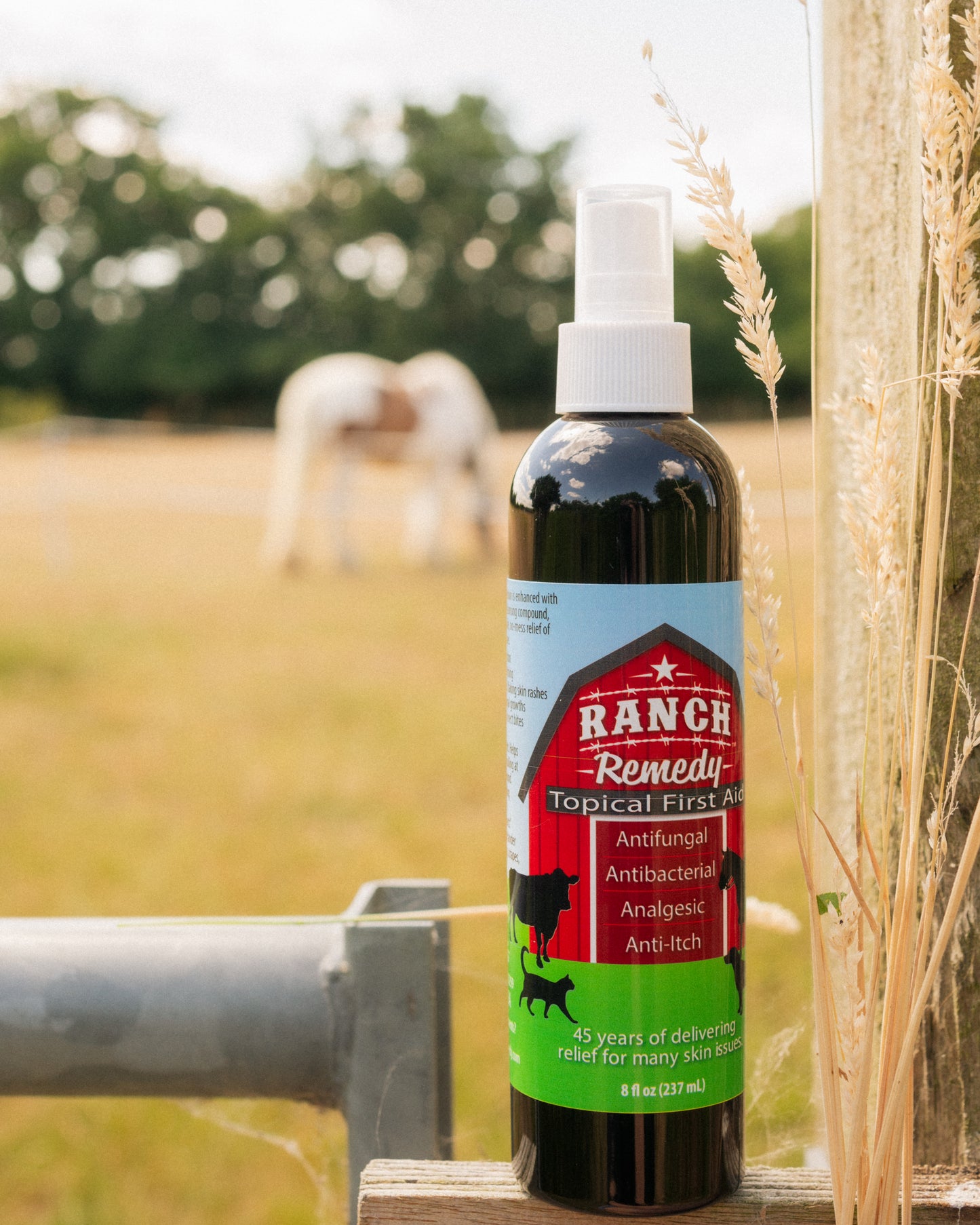
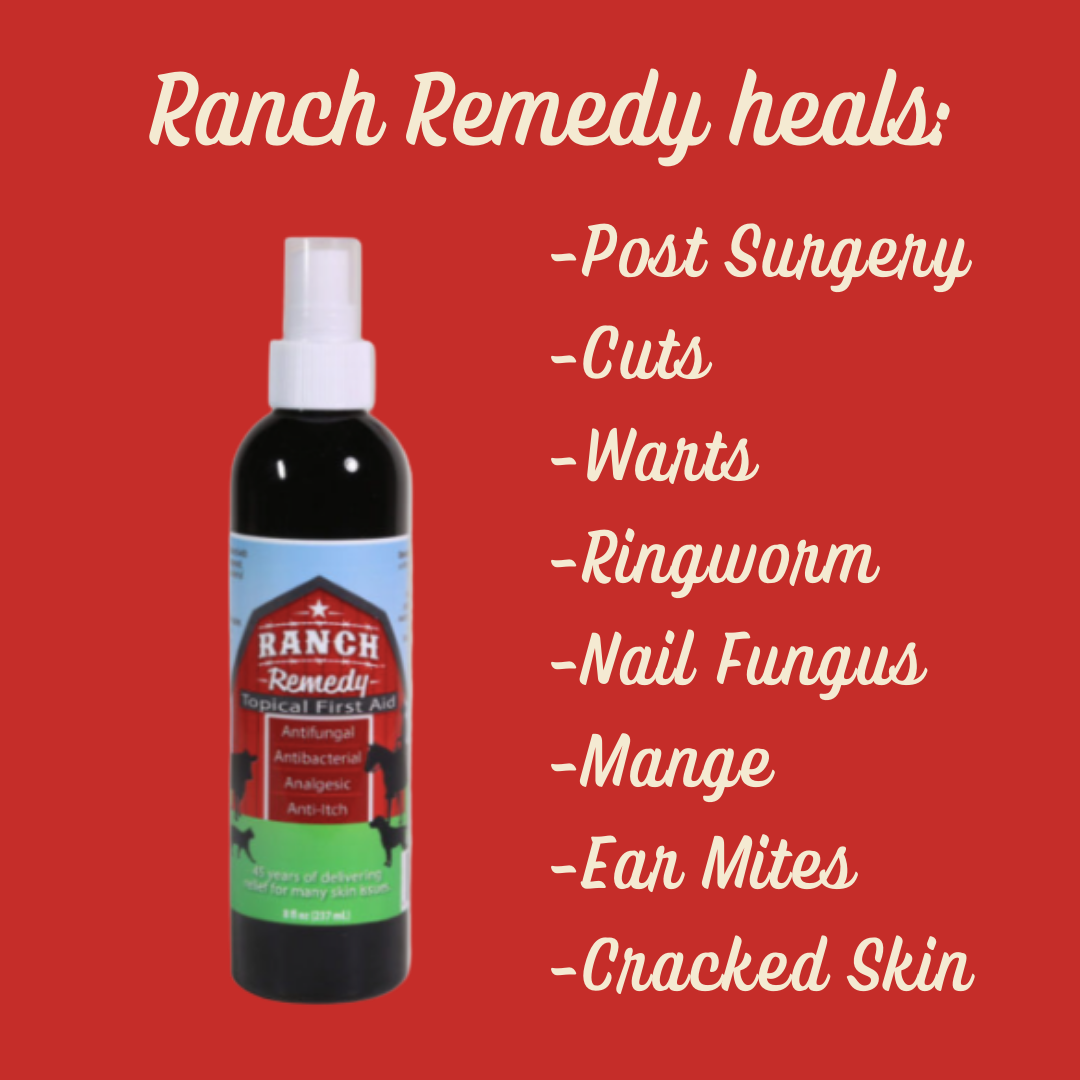
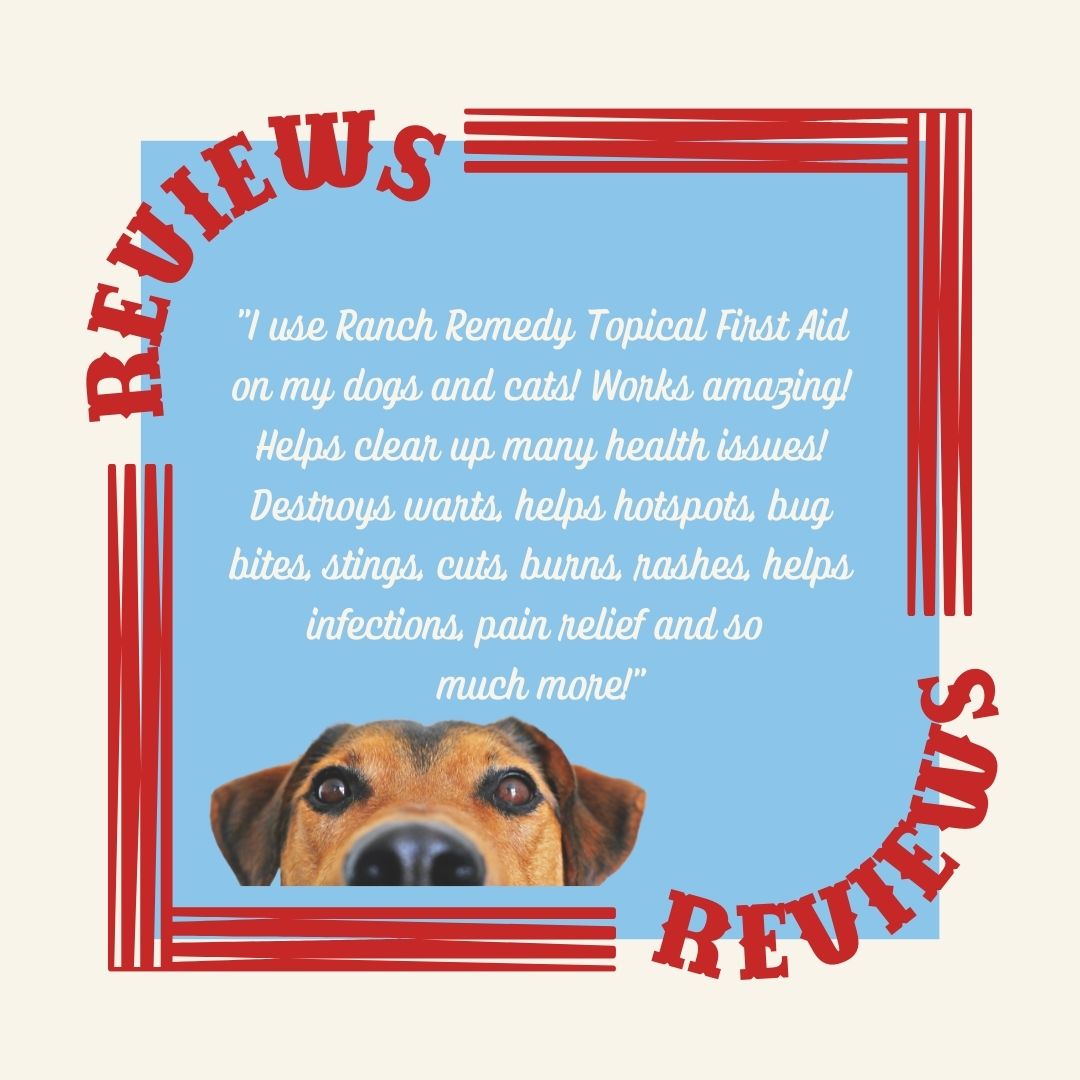
Ranch Remedy Topical First Aid is a plant-based spray made for everyday paw care: minor irritation, scrapes, dry or cracked pads, and itchy spots. It was first used by people for their own skin before we ever used it on our animals, which is why we say "Ranch Remedy, Human Tested, Animal Approved."
Use it twice a day for 7 to 10 days as part of the home care routine above. For hard-to-reach spots between the toes, spray it onto a cotton ball and dab it on. If your vet has diagnosed an infection, ask them how to fit it in alongside any prescribed treatment.
Keep your first aid kit ready. Shop Ranch Remedy Topical First Aid, the 8 oz plant-based spray for dogs, cats and horses.
This article is for general information and is not a substitute for veterinary advice. If you are worried about your dog's paw, please contact your veterinarian.